
Which Is Better?
When choosing window coverings for your home, there are more options than ever — from traditional curtains to external blinds and modern integral blinds.
But which is the best choice for your space? In this guide, we compare each option to help you decide what works best for your home, lifestyle, and budget.

What are Integral Blinds?
Integral blinds are fitted between the panes of glass within a sealed unit, typically used in windows, bi-fold doors, and patio doors.
- Sealed inside the glass: Protected from dust, damage, and wear.
- Low maintenance: No cleaning or upkeep required.
- Modern appearance: Clean, clutter-free finish.
- Easy operation: Controlled manually or magnetically.
If you’re new to this option, you can read our full guide here:
Integral Blinds Explained: Are They Right for Your Home?

Integral Blinds vs Curtains
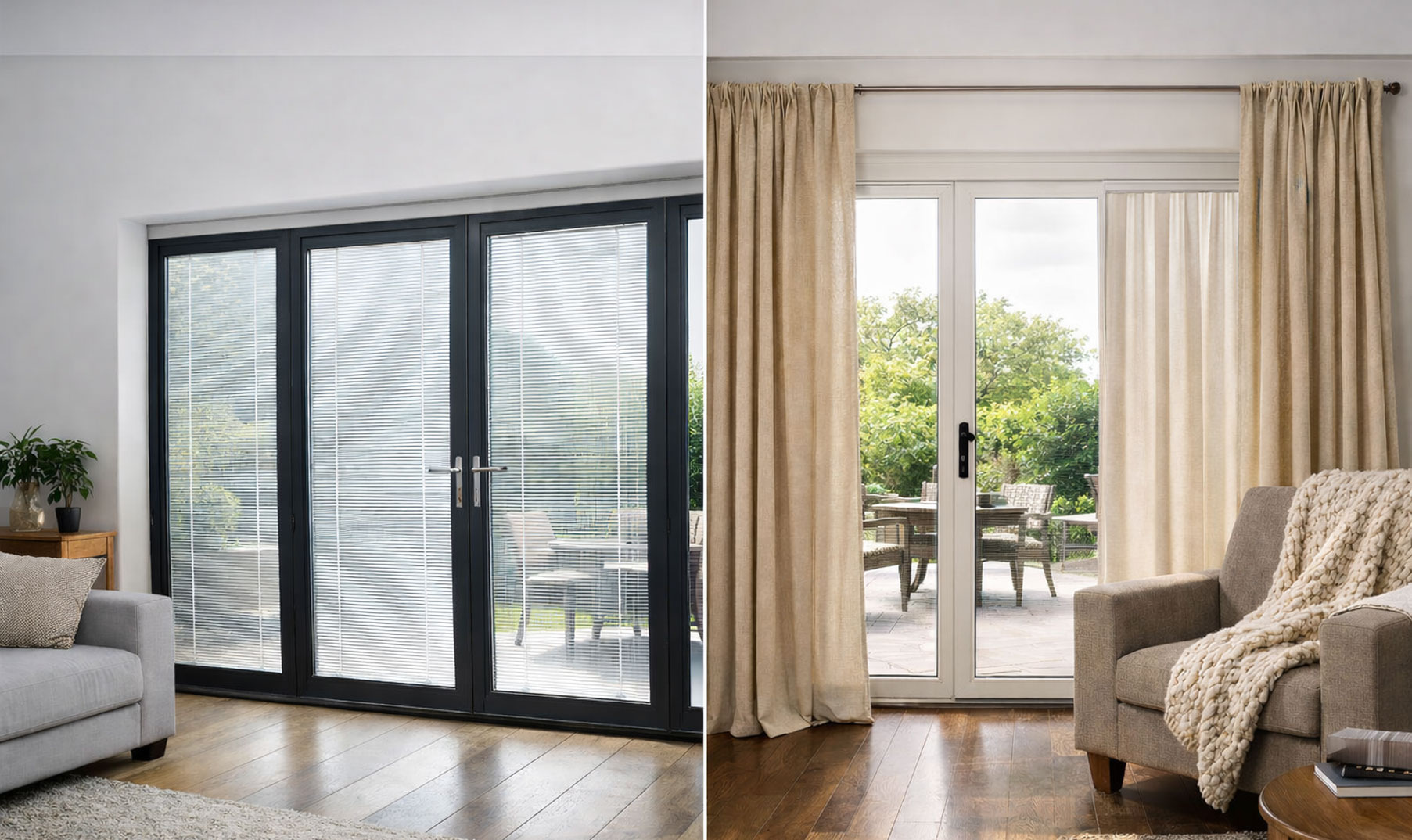
Curtains are the traditional choice, but how do they compare to integral blinds?
- Maintenance: Curtains require regular cleaning, while integral blinds stay sealed and dust-free.
- Appearance: Curtains can feel bulky, whereas integral blinds offer a sleek, modern look.
- Space saving: Integral blinds sit within the glass, freeing up space around doors and windows.
- Durability: Curtains can fade and wear over time, while integral blinds are protected inside the unit.
For modern homes, extensions, and open-plan spaces, integral blinds are often the more practical and stylish option.

Integral Blinds vs External Blinds
External blinds are commonly used for shading, but they serve a slightly different purpose.
- Weather exposure: External blinds are exposed to wind and rain, while integral blinds are fully protected.
- Longevity: Integral blinds typically last longer due to their sealed design.
- Control and convenience: Integral blinds are easy to operate without stepping outside.
- Aesthetics: External blinds can affect the external look of your home, while integral blinds remain discreet.
External blinds can be useful for shading, but integral blinds are better suited for everyday privacy and ease of use.

Which option is Best for your Home?
The right choice depends on how you use your space and the style of your home.
- Modern homes and extensions: Integral blinds offer a clean, contemporary finish.
- Large glass areas: Ideal for bi-fold and patio doors where curtains can be impractical.
- Low-maintenance living: Perfect if you want a “fit and forget” solution.
- Traditional spaces: Curtains may still suit period-style interiors.
If you’re planning a new living space, you may also find this helpful:
Building a New Living Space: What to Expect

Are Integral Blinds worth it?
While integral blinds can have a higher upfront cost than curtains, they offer long-term value.
- No cleaning costs: No washing, dusting, or maintenance required.
- Long lifespan: Protected inside the glass for lasting performance.
- Improved usability: Ideal for doors and high-use areas.
- Modern appeal: Adds value and style to your home.
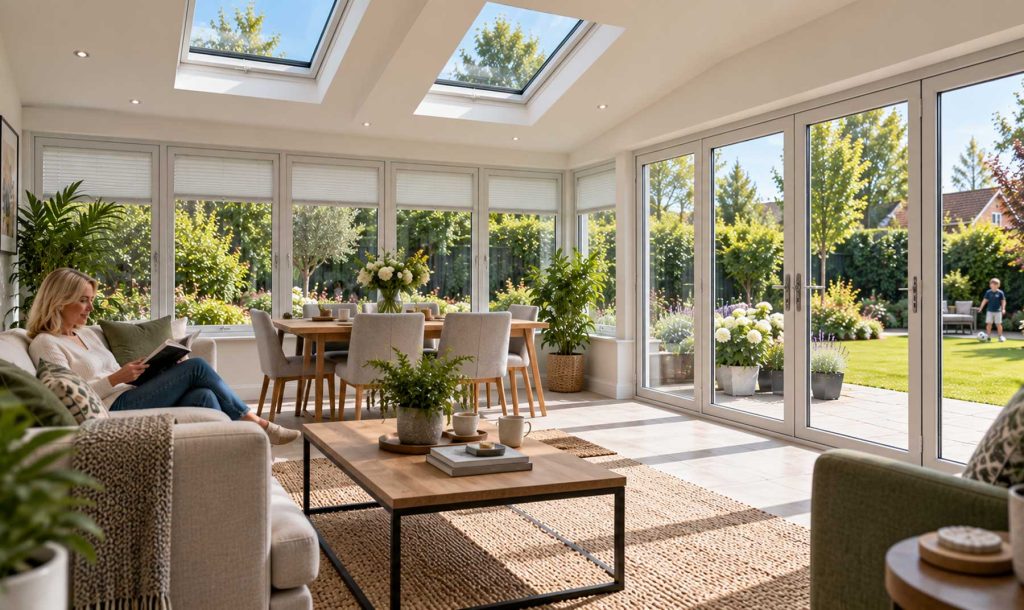
They are particularly popular in modern extensions and conservatories, where practicality and appearance both matter.
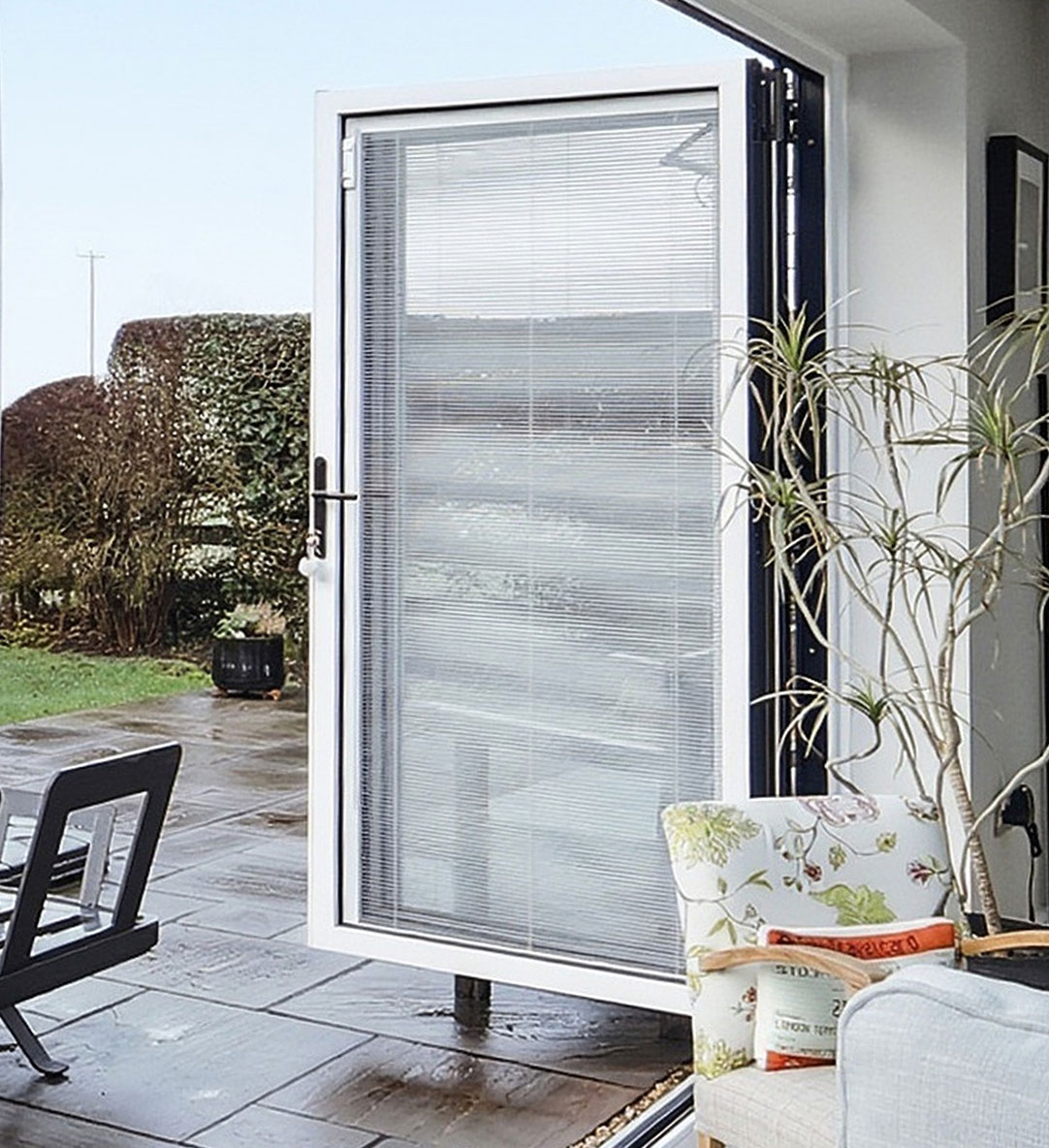
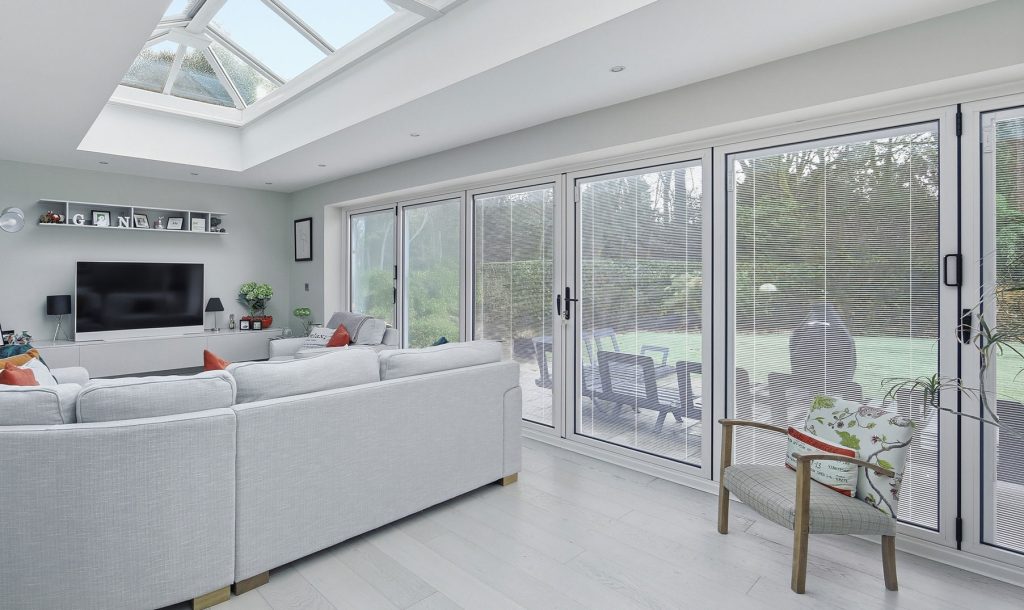
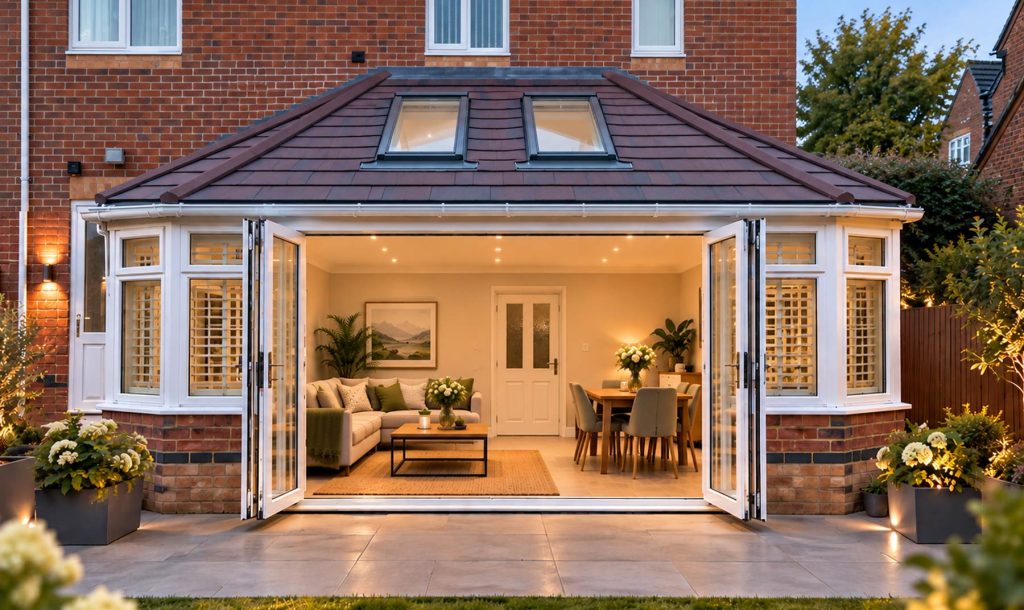
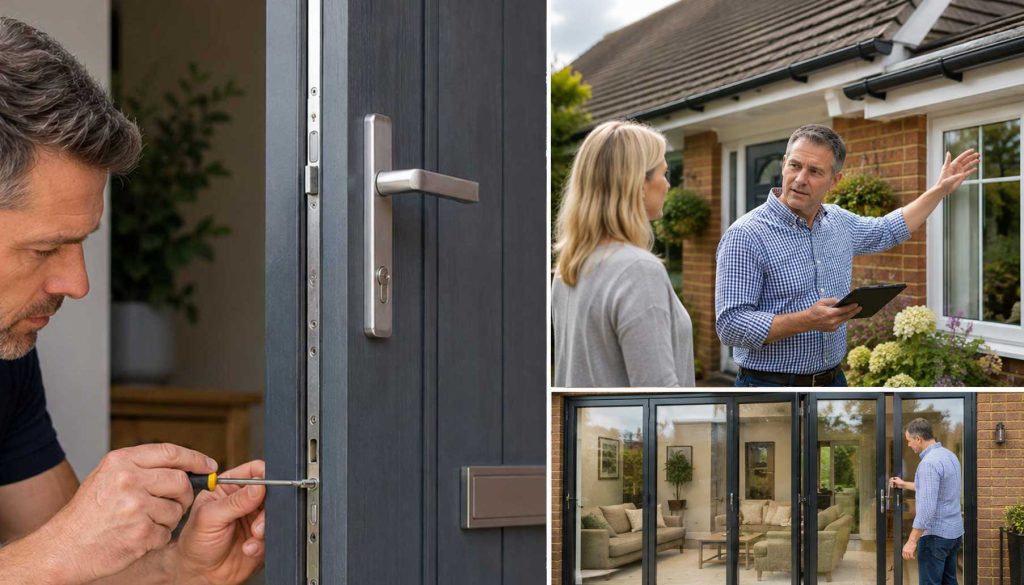
Integral blinds inside a bi-fold door
(This is impossible using traditional blinds or curtains)
Where do Integral Blinds work Best?
Integral blinds are especially effective in areas with large glazed openings.
- Bi-fold doors: Smooth operation without fabric getting in the way.
- Sliding patio doors: Clean look with easy privacy control.
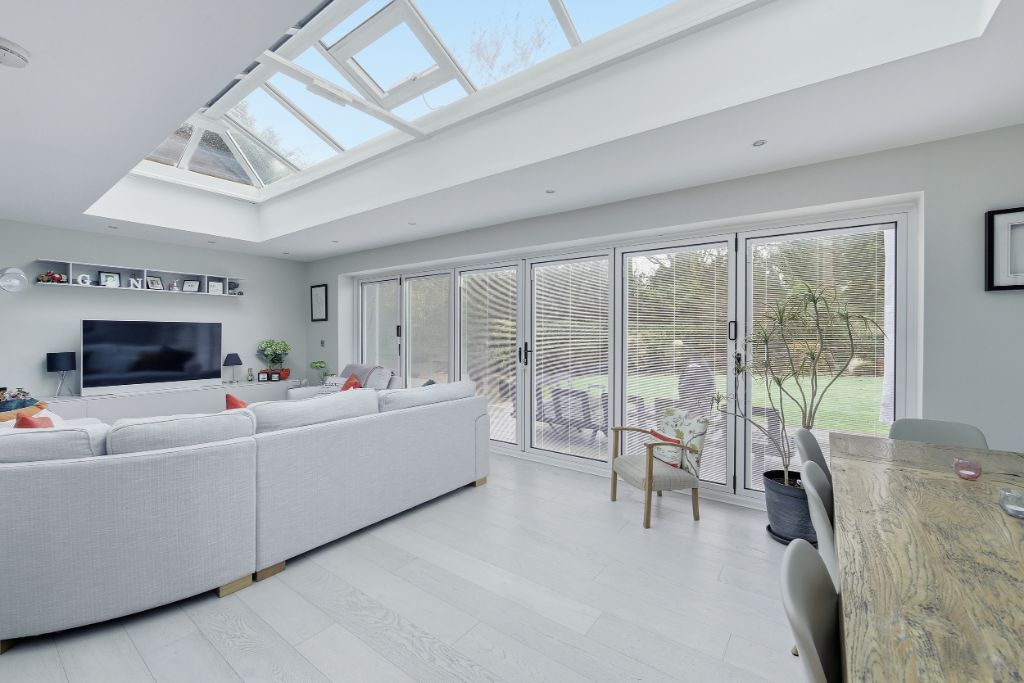
- Conservatories: Helps manage light and glare.
- Kitchens and dining areas: Ideal for busy, high-traffic spaces.
You can also explore our installations here which has some examples using Integral Blinds: View projects on the ‘Our Work’ page. or you there is a gallery on our dedicated Integral Blinds page.

Final thoughts on Integral Blinds versus Curtains
If you’re looking for a modern, low-maintenance solution that works seamlessly with today’s homes, integral blinds are hard to beat.
While curtains and external blinds still have their place, integral blinds offer a practical, long-lasting upgrade — especially for doors, extensions, and open-plan living spaces.