
Multipoint, Lever, Deadbolt & Smart Locks
Choosing the right door lock is one of the most important steps in protecting your home. Modern doors are designed with advanced locking systems that improve security, reliability, and ease of use. However, many homeowners are unsure which type of lock their door uses or which option offers the best protection.
From traditional mortice locks to modern smart locking systems, each type works slightly differently and provides its own advantages. Understanding how these locks operate can help you make better decisions when upgrading doors or improving your home’s security.
If you are considering replacing your entrance door, you may also find our guide on composite door costs useful when comparing modern door options.
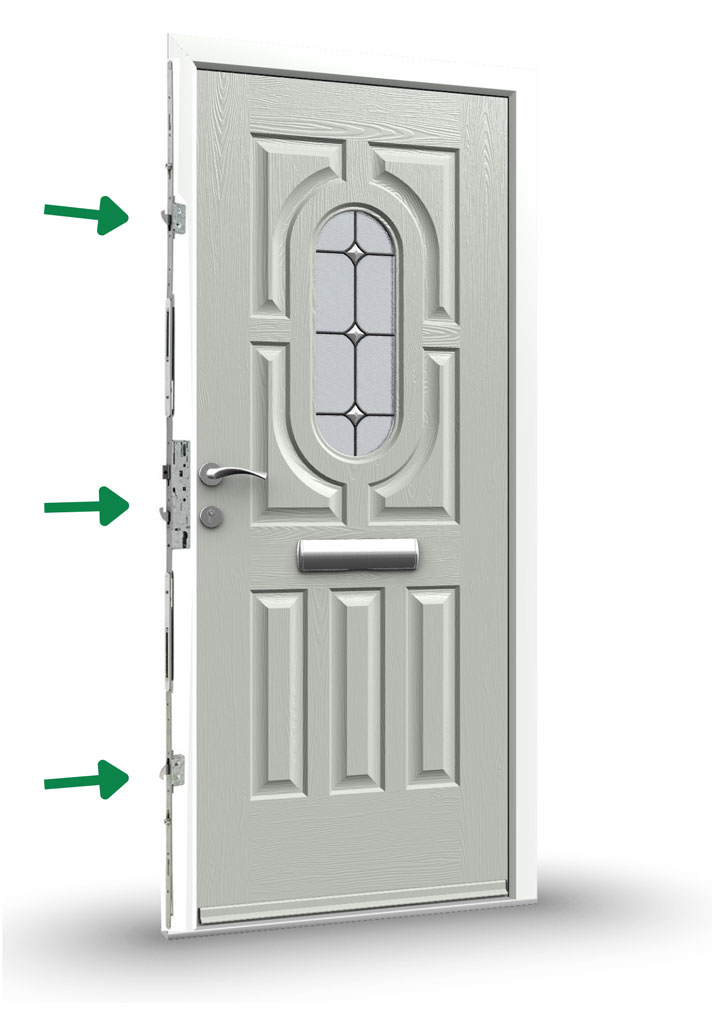
Multipoint Locking Systems
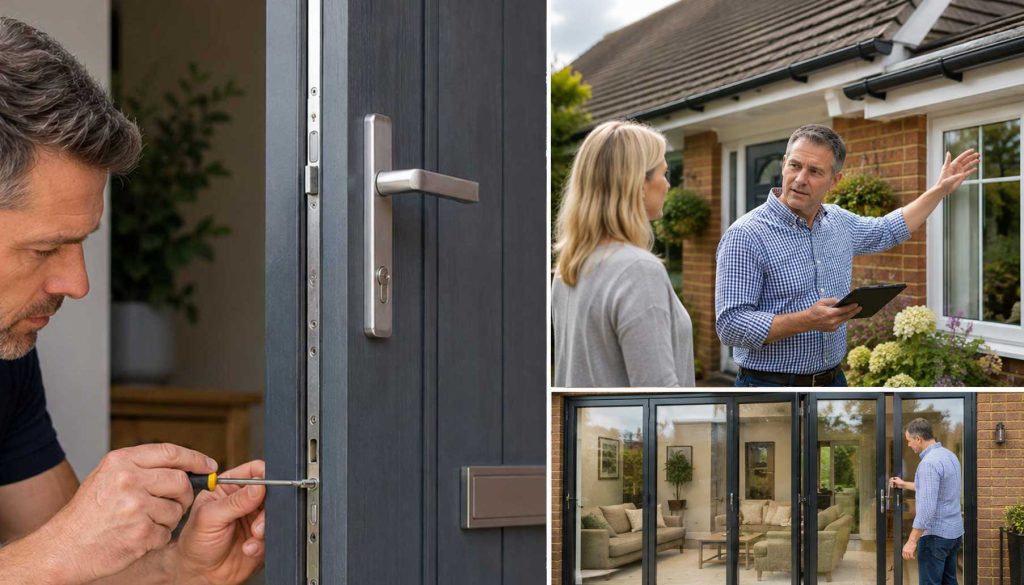
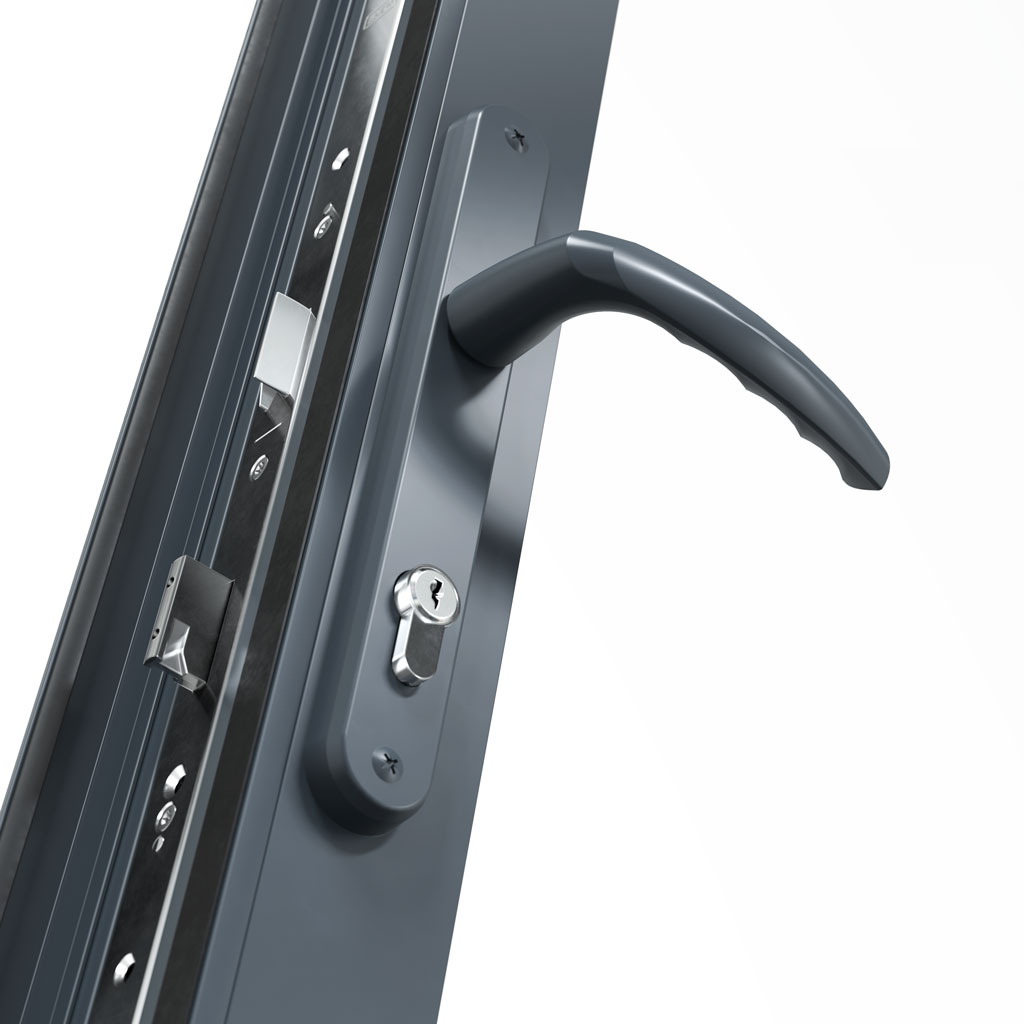
Multipoint locking systems are commonly used in modern uPVC and composite doors. Instead of locking in just one place, the mechanism secures the door frame at multiple points along the edge when the handle is lifted or the key is turned.
This type of lock significantly improves security by spreading the locking pressure across the door frame rather than relying on a single bolt.
- Multiple locking points: Hooks, rollers, and bolts secure the door at several points along the frame.
- Improved security: The door is much harder to force open because the locking force is spread across the entire frame.
- Better weather sealing: Pulls the door tightly into the frame to improve insulation and reduce draughts.
- Standard on modern doors: Most composite and uPVC entrance doors are fitted with multipoint locking systems.
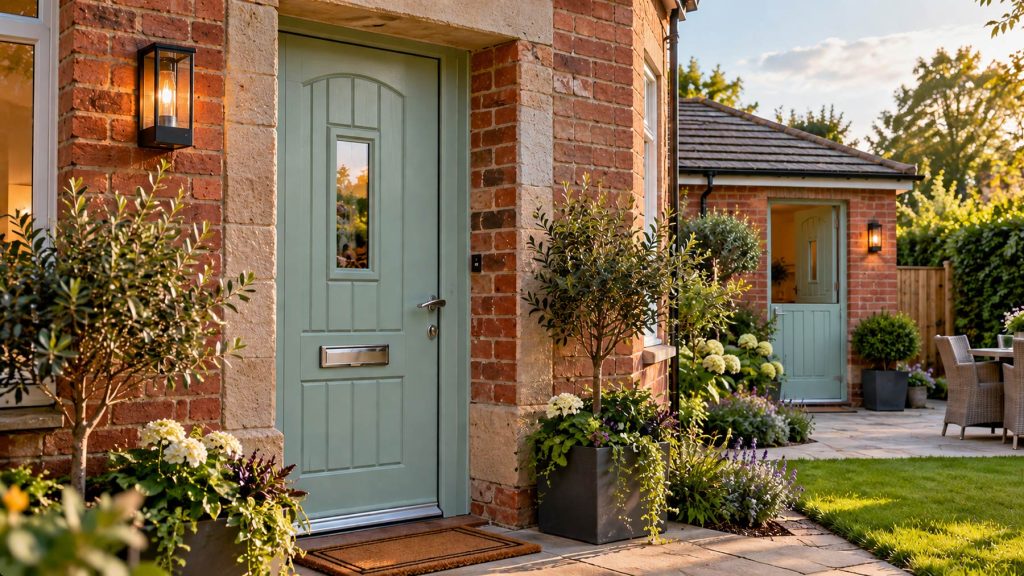
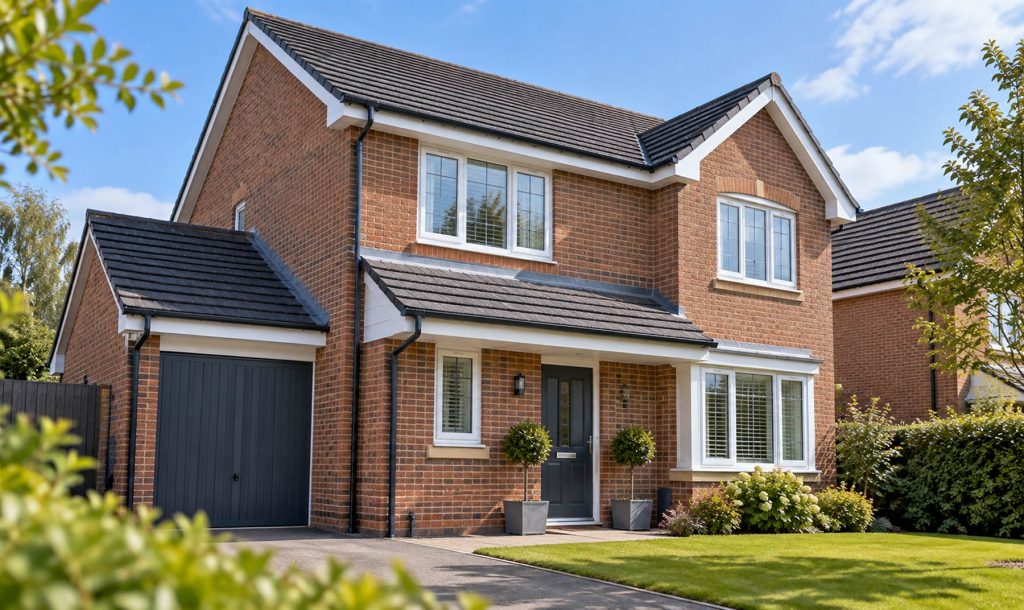
You can see examples of modern entrance doors fitted with multipoint locking systems on our recent installation projects page.

Lever Locks (Mortice Locks)
Lever locks, often referred to as mortice locks, are a traditional type of lock commonly fitted to wooden doors. The mechanism sits inside a pocket cut into the door and is operated using a key.
- Installed within the door: The lock mechanism is hidden inside the door itself.
- Traditional security option: Commonly used on timber doors and older properties.
- Different security levels: Five-lever mortice locks offer stronger protection than three-lever versions.
- Often paired with night latches: Many homes combine mortice locks with additional surface-mounted locks.
While lever locks remain reliable, modern doors often incorporate multipoint locking systems because they secure the door along its entire length rather than at a single point.

Deadbolt Locks
Deadbolt locks are widely known for their simple but effective design. A solid metal bolt extends deep into the door frame when locked, making the door far more resistant to forced entry.
- Solid locking bolt: A strong metal bolt secures the door into the frame.
- Key or thumb-turn operation: Some versions lock with a key on both sides, while others use an internal turn knob.
- Often used as secondary security: Frequently combined with another lock type for additional protection.
- Simple and durable mechanism: Fewer moving parts mean less wear over time.
Deadbolts are widely recognised as a reliable security solution and are often recommended as part of a layered home security approach. Guidance from the Master Locksmiths Association highlights the importance of choosing high-quality locks that meet recognised security standards.

Smart Door Locks
Smart locks are becoming increasingly popular as more homeowners look for convenient, connected security systems. These locks allow you to control your door using a smartphone, keypad, fingerprint reader, or integrated smart home system.
- Keyless entry: Unlock your door using codes, smartphone apps, or fingerprint access.
- Remote control: Lock and unlock your door from anywhere using a mobile device.
- Access monitoring: Track when doors are opened and who has entered your home.
- Smart home compatibility: Integrates with alarms, cameras, and automation systems.
Smart locks can be fitted to certain modern doors or installed alongside existing locking systems for added convenience.
If you are upgrading your doors, you might also find our guide on integral blinds for doors and windows helpful when considering privacy, security, and convenience features together.
Which Door Lock Is Best?
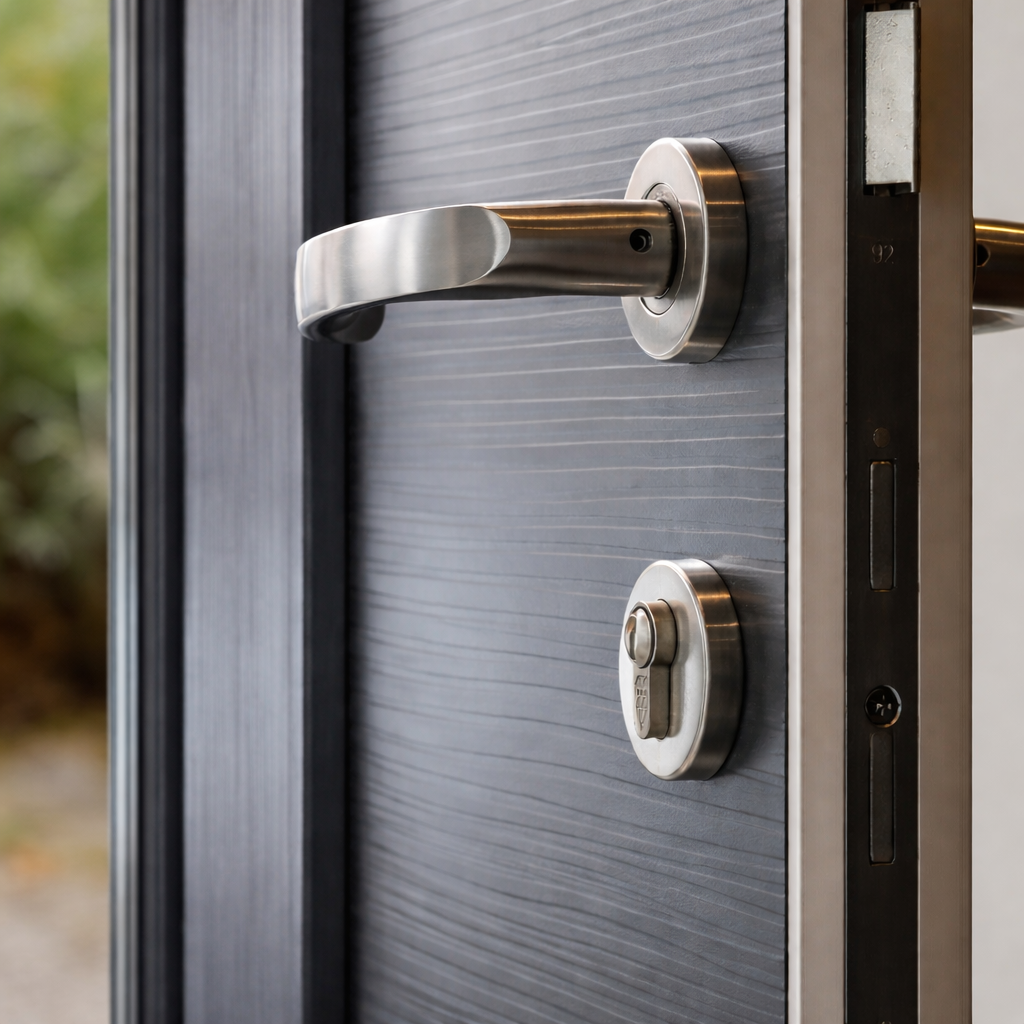
The best lock for your home will depend on your door type and the level of security you require. Multipoint locking systems are now considered the standard option for modern composite and uPVC doors, while traditional timber doors may still use mortice locks or deadbolts.
Smart locks are also growing in popularity as homeowners look for easier access control and integration with modern home security systems.
When choosing a new door, it is important to consider both the door construction and the locking system together. A well-designed door fitted with a high-quality lock will provide stronger security, better insulation, and improved peace of mind.
For more inspiration, take a look at our door designs, or for more info visit the door locks page to see how modern doors can enhance both the appearance and security of your home.