
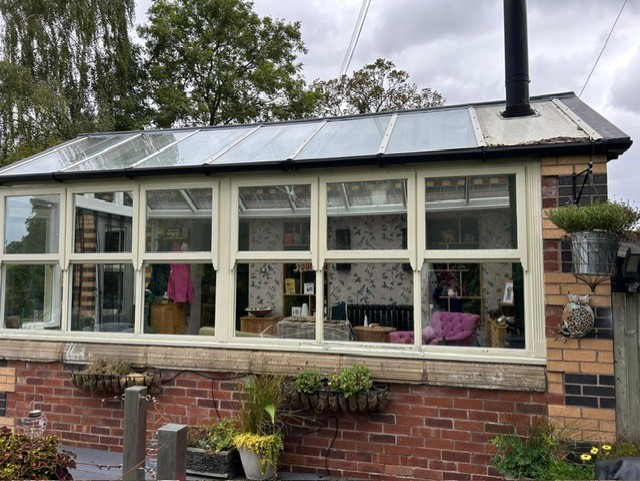
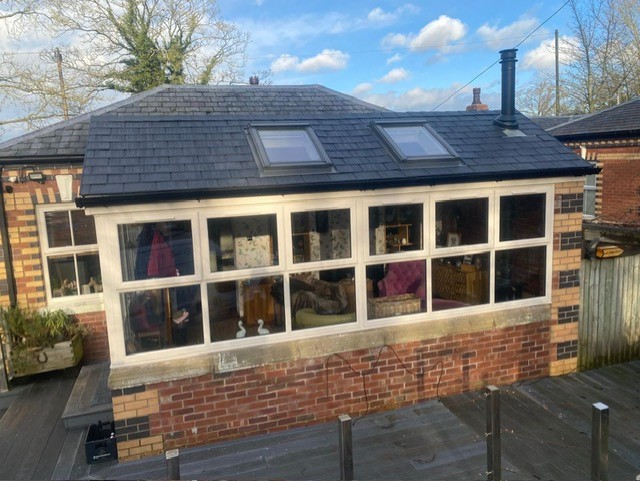
Many homeowners in Cheshire love their conservatory — but far fewer enjoy how cold it becomes in winter or how uncomfortable it feels in summer. One of the most effective upgrades is replacing a glass or polycarbonate roof with a fully insulated tiled roof.
But the big question most people ask is simple: how much warmer will my conservatory actually be? The answer depends on your current roof, the level of insulation installed, and how you use the space. In this guide, we explain what you can realistically expect.

Why conservatories lose heat
Traditional conservatory roofs are designed primarily for light, not insulation. Large areas of glass allow warmth to escape quickly, meaning your space struggles to retain heat even when radiators or electric heaters are running.
- Single or thin glazing: Loses heat far faster than modern insulated materials.
- Minimal roof structure: Little room for proper insulation.
- Temperature extremes: Very hot in summer and very cold in winter.
- Energy inefficiency: You pay more to heat a space that won’t hold warmth.

What changes with a tiled conservatory roof?
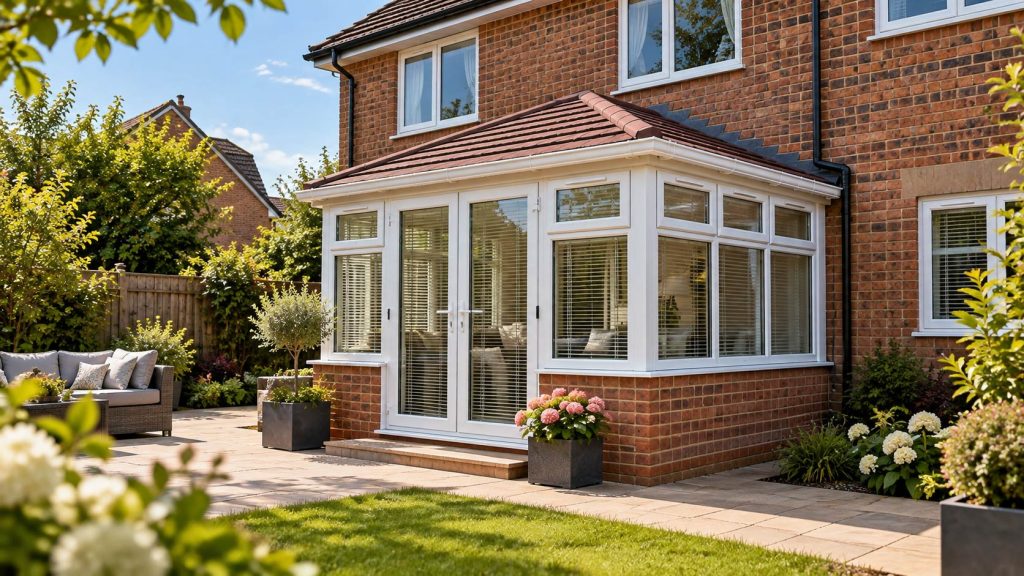
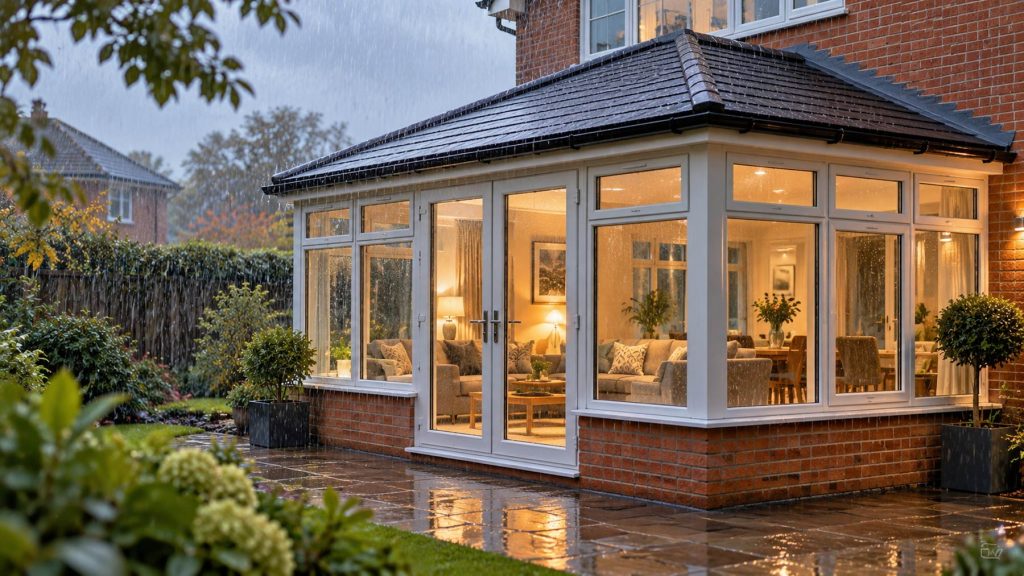
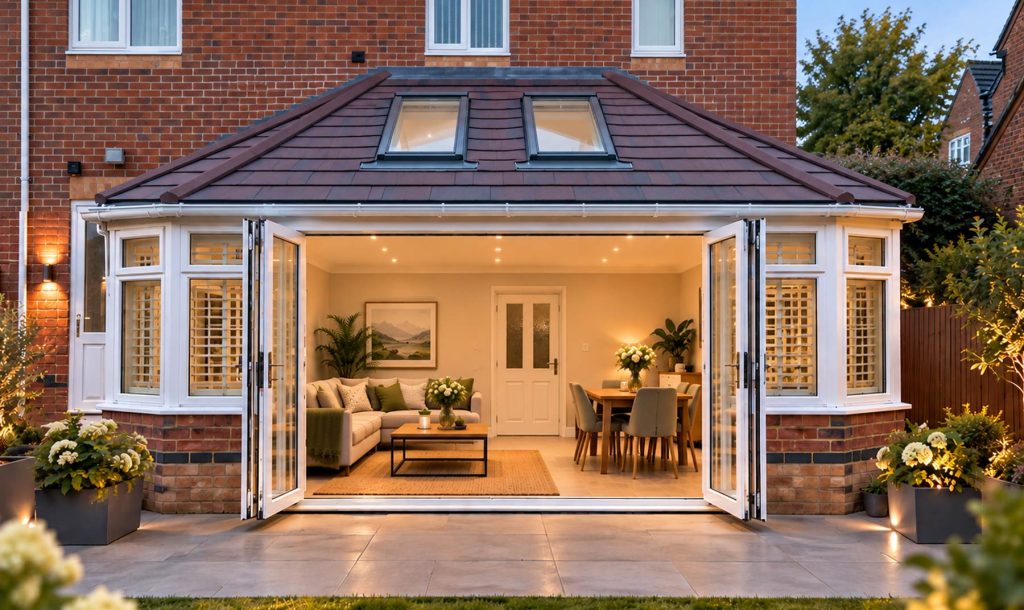
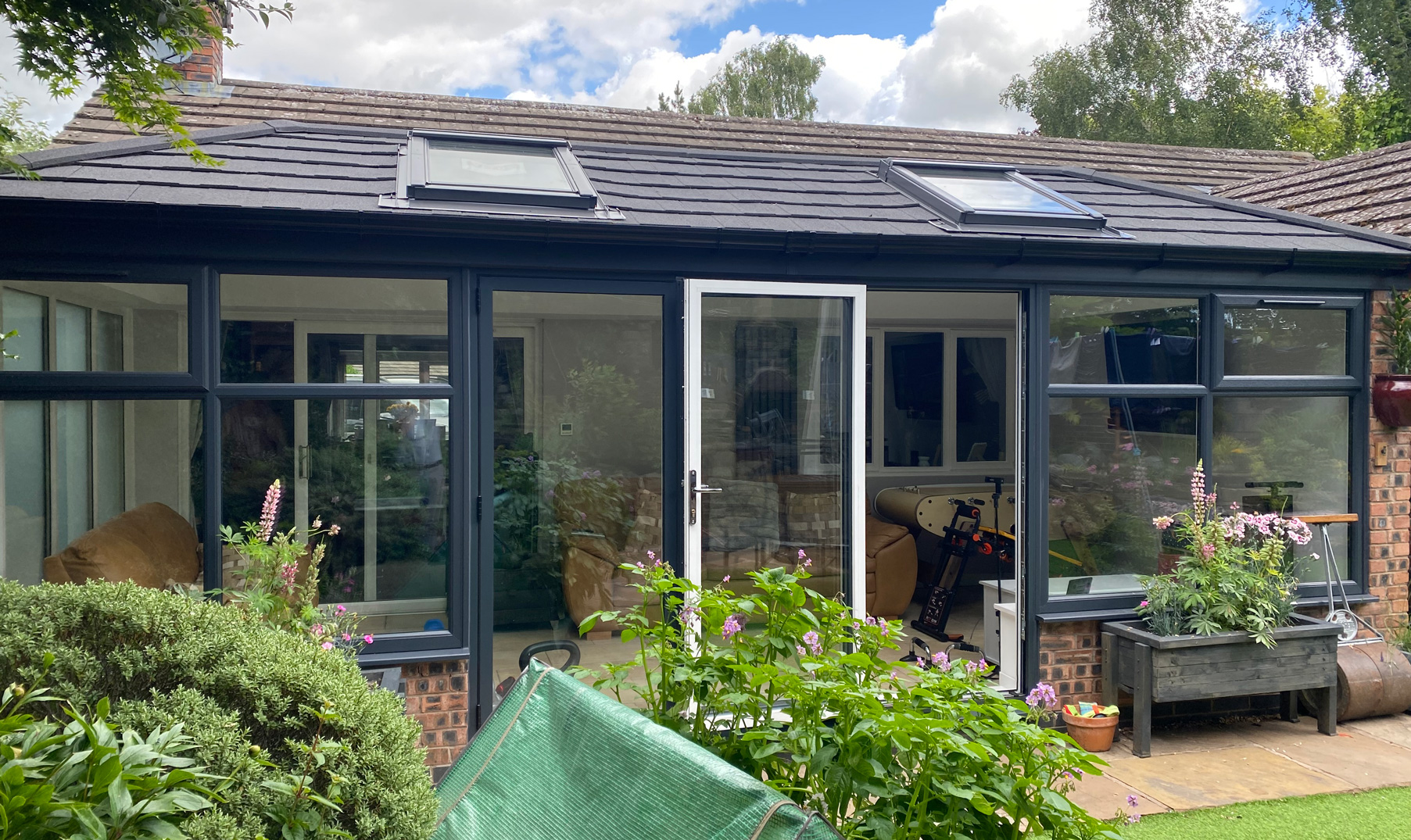
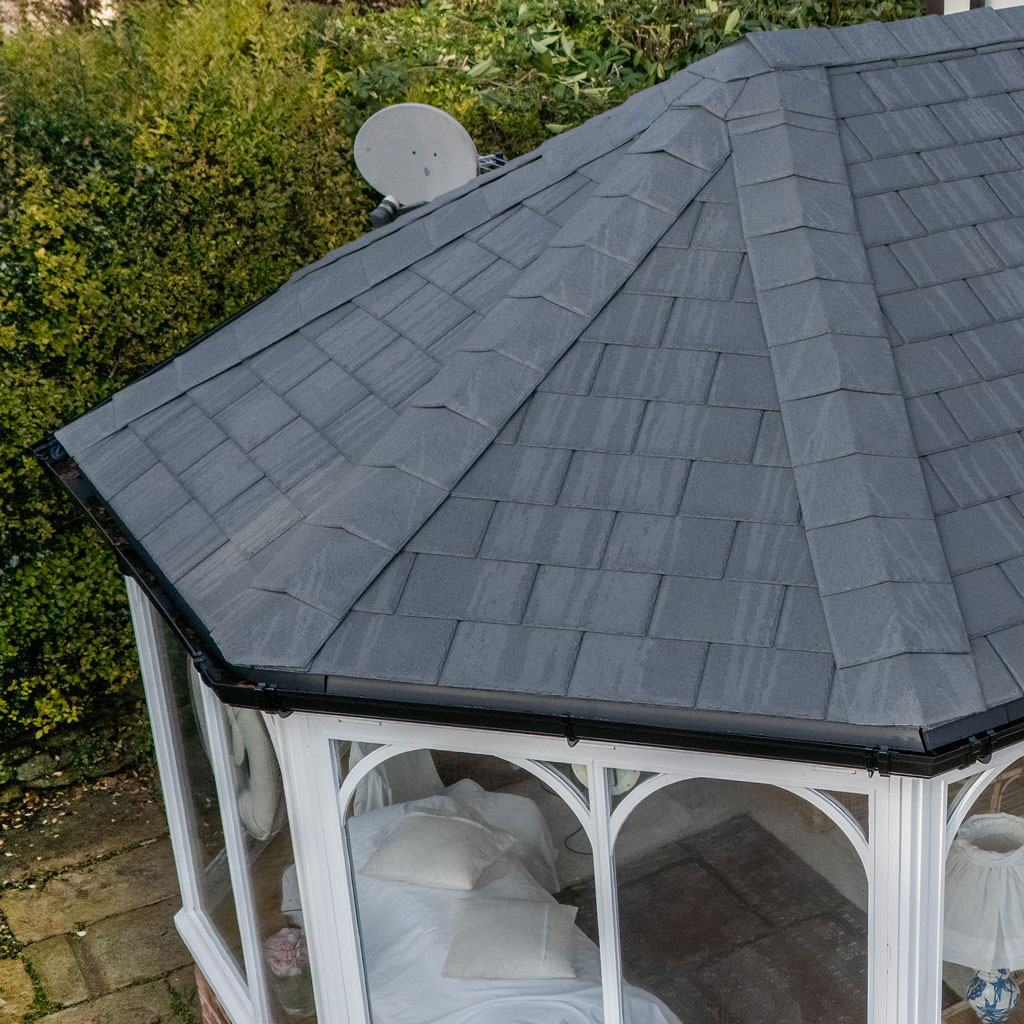
A modern tiled roof replaces glass with a solid, thermally efficient structure that behaves much more like a traditional extension roof. Instead of simply letting light through, it actively helps regulate temperature.
- Built-in insulation layers: Reduces heat loss through the roof.
- Improved air sealing: Limits draughts and cold spots.
- More stable temperatures: Keeps the room warmer in winter and cooler in summer.
- Better acoustic performance: Quieter during heavy rain.
You can explore design options on our tiled conservatory roofs page.
So… how much warmer will it be?
In real homes across Cheshire, most homeowners report a noticeable temperature increase after installation. While exact figures vary, you can generally expect:
- Winter improvement of 4–8°C: Many conservatories move from “too cold to use” to genuinely comfortable.
- More consistent heating: Radiators or underfloor heating become far more effective.
- Less heat loss overnight: The room cools down more slowly.
- Fewer cold draughts: Especially around roof edges and ridge lines.
Summer comfort is just as important
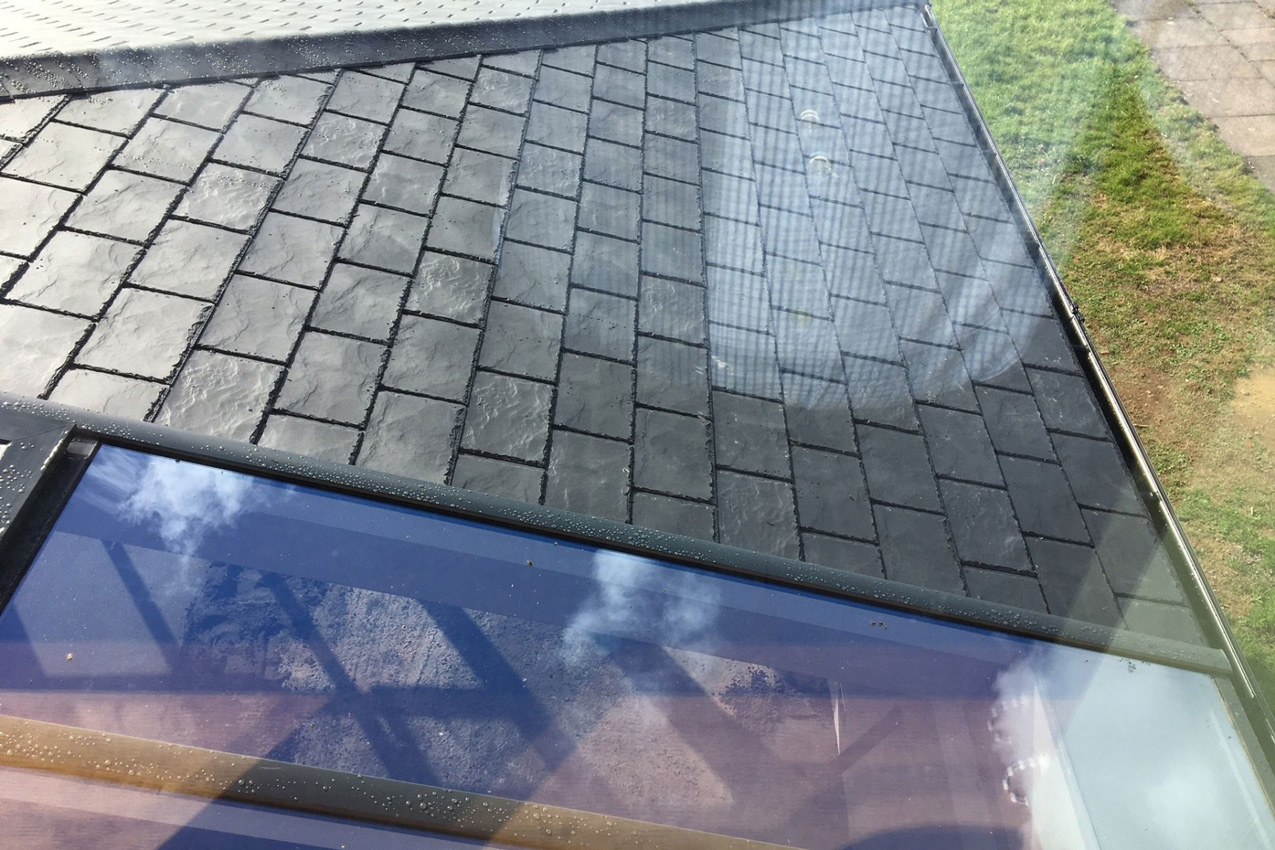
A tiled roof doesn’t just make your conservatory warmer in winter — it also makes it cooler in summer. This is one of the biggest lifestyle upgrades for Cheshire homeowners.
- Reduced overheating: No harsh greenhouse effect.
- More usable all year: Works as a true living space, not just a seasonal room.
- Less reliance on blinds or fans: Natural temperature control does most of the work.
For a deeper comparison between roof types, see our advice guide: Insulated tiled roof vs glass roof.
Is it better than a solid roof?
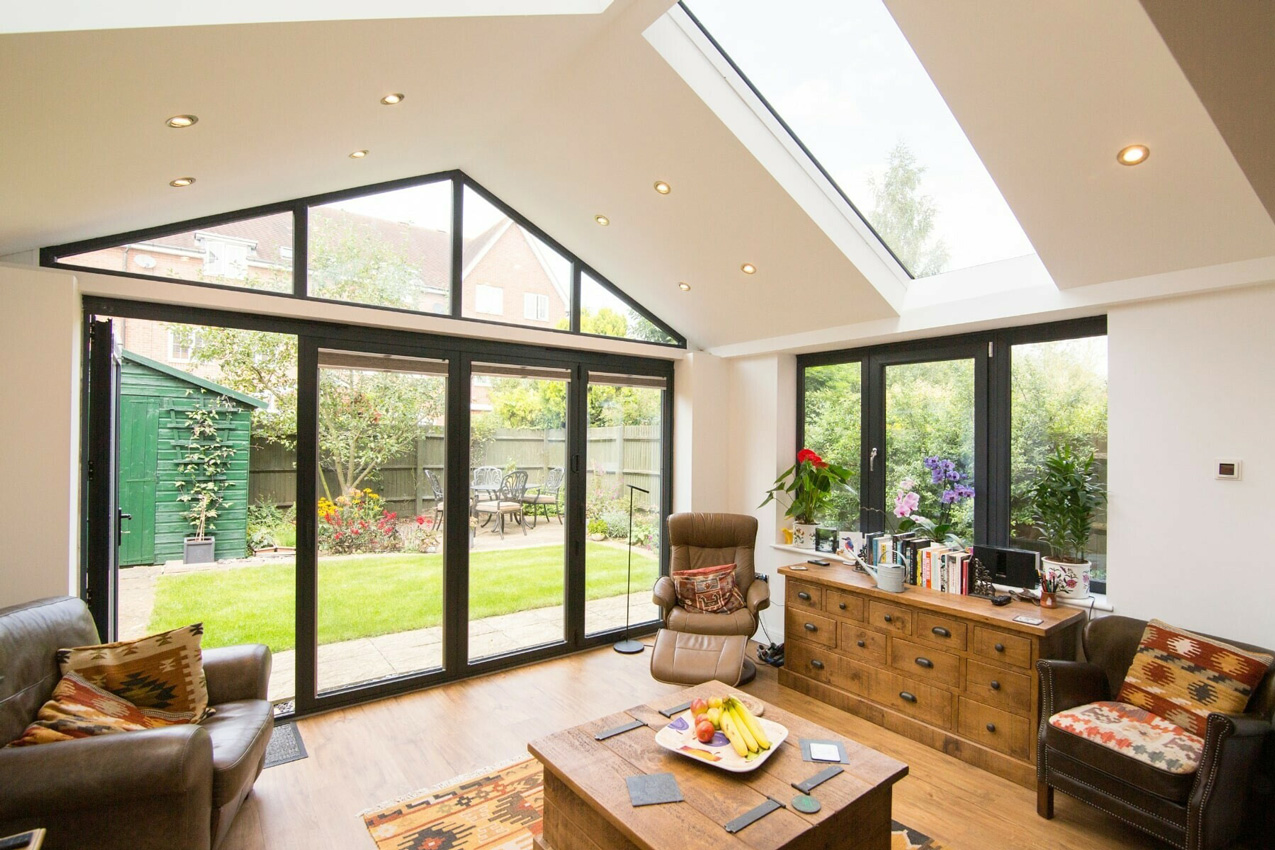
Both tiled and solid conservatory roofs offer major thermal improvements, but they work slightly differently. Tiled roofs tend to feel more traditional, while solid roofs can create a seamless extension-style ceiling inside.
- Tiled roofs: Great balance of aesthetics and insulation.
- Solid roofs: Often deliver the highest thermal performance.
- Both options: Transform conservatories into year-round rooms.
Compare your options here: solid conservatory roofs.

What this means for your energy bills
A warmer conservatory means you’ll use less heating to maintain a comfortable temperature. Over time, this can lead to meaningful savings — especially if your conservatory connects directly to your home.
The Energy Saving Trust explains how better insulation reduces heat loss and running costs across the home: Energy Saving Trust.

Turning your conservatory into a proper living space
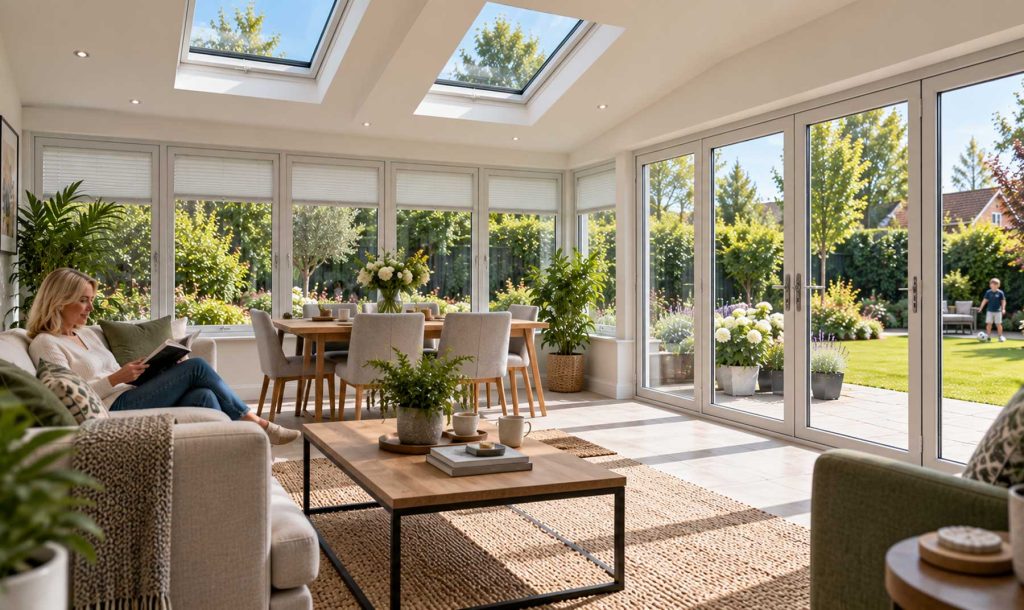
Many homeowners go a step further after installing a tiled roof, redesigning their conservatory as a permanent lounge, dining room, or home office.
- Better furniture placement: No more cold zones.
- Improved interior design: You can add proper lighting and finishes.
- Stronger connection to your home: Feels like part of the house, not an add-on.
See how others have used their spaces in our living spaces galleries.

What you can realistically expect
If your conservatory is currently uncomfortable in winter, a tiled roof will almost certainly make a dramatic difference. Most Cheshire homeowners describe the change as “night and day.”
While exact temperature gains depend on glazing, wall construction, and heating, you can confidently expect a noticeably warmer, quieter, and more usable room — all year round.
If you’re considering a roof upgrade, the real question isn’t whether it will be warmer — but how quickly you’ll wish you’d done it sooner.